What affects the price
Five things drive the price of a spring repair: the type of spring (torsion or extension), how many springs your door uses, the spring's cycle rating, the size and weight of your door, and whether you need emergency after-hours service. A single-car door with one standard torsion spring is on the simpler end. A heavy, insulated two-car door with a pair of high-cycle springs costs more.
Torsion vs. extension springs
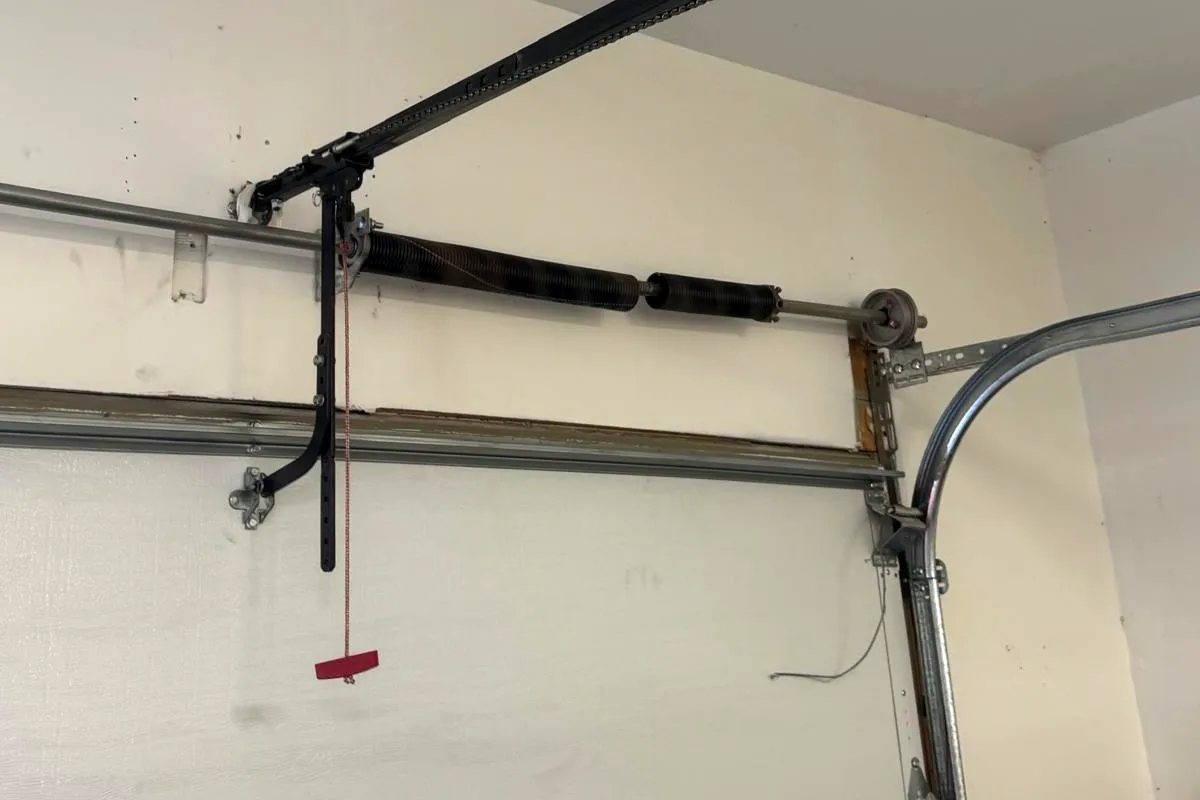
Torsion springs mount on a bar above the door and are the most common on newer Denver homes. Extension springs run along the horizontal tracks on each side and are common on older homes. Both work, but torsion systems are usually smoother and safer, and converting an older door to torsion is a common upgrade.
One spring or both?
If your door has two springs and one breaks, the other has done the same number of cycles and is usually close to failing too. Replacing both at once typically costs less than two separate visits and keeps the door balanced. A good technician will explain this and let you choose, not pressure you.
Standard vs. high-cycle springs
Springs are rated by how many open-close cycles they're built to last. If your garage is your main entrance and the door runs several times a day, a high-cycle spring costs more up front but lasts much longer, so the cost per year is often lower.
In the Denver metro and need help now? Call (720) 914-7554, available 24/7.
What else might be needed
While replacing springs, a technician should check the cables, drums, rollers, and bearings. Frayed cables or worn rollers are worth replacing at the same time if they're near the end of their life, but they shouldn't be added without showing you why.
How to avoid overpaying
Ask for the full price, including parts, labor, and any service fee, before any work starts. Ask what spring size and cycle rating you're getting. Be careful with very low phone quotes that turn into a much bigger bill on site. At Summit, you get one flat-rate price upfront, and nothing changes unless you approve it.
Why not DIY?
Garage door springs hold enough tension to cause serious injury. Winding or unwinding a torsion spring without the right tools and training is one of the most dangerous home repairs. This is one job worth leaving to a pro.