What happens during a spring repair visit
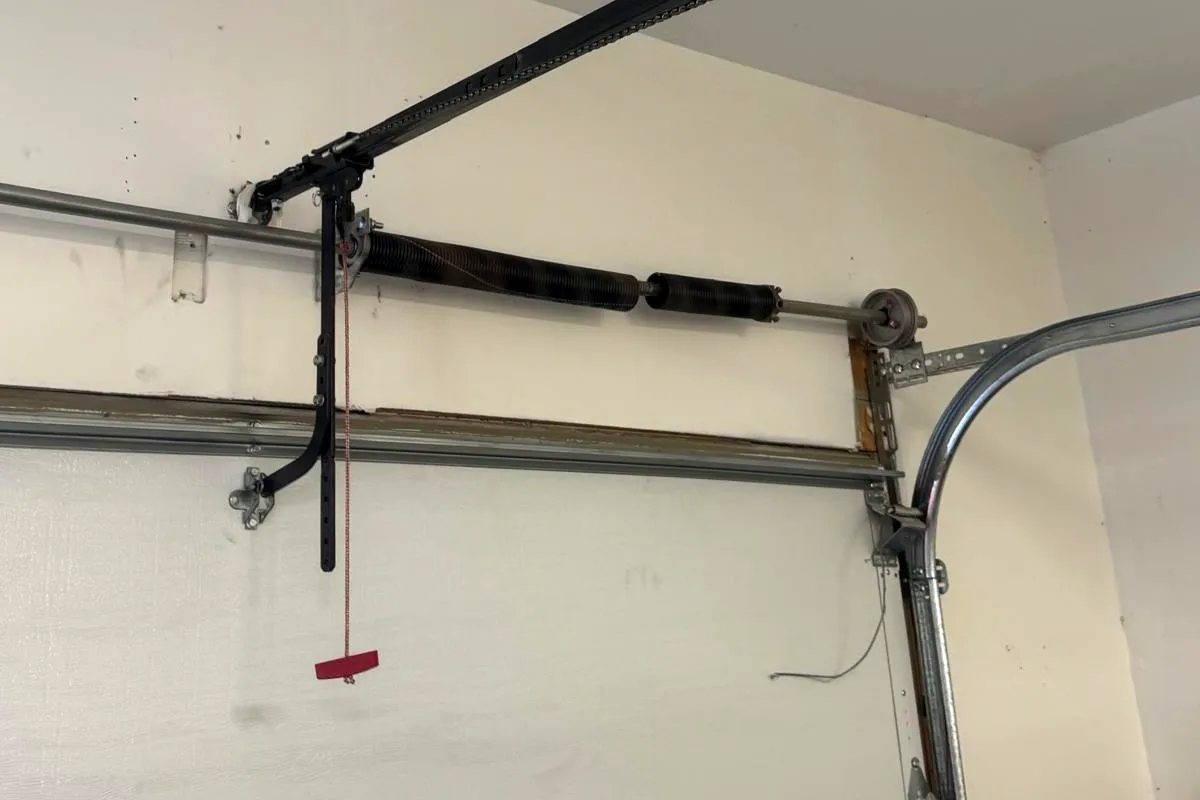
We start by securing the door so it can't move while the old spring is under tension. Then we identify your spring type — torsion (mounted on a bar above the door) or extension (running along the horizontal tracks) — and measure the wire size, length, and wind so the new spring actually matches your door's weight.
On most two-spring doors we recommend replacing both springs together. Springs are installed as a matched pair, so when one breaks the other is usually close behind — replacing both avoids a second service call a few weeks later. We explain the options and let you decide.
Before we leave, we balance the door, check the cables, drums, and rollers that work with the springs, lubricate moving parts, and test the opener and safety sensors. You get a door that opens smoothly and stays where you put it.
Standard or high-cycle springs?
Every spring is rated for a number of open-close cycles. If your garage is your main entrance and the door runs several times a day, a higher-cycle spring costs a bit more up front but lasts noticeably longer. We'll show you both options and the price of each before any work starts.